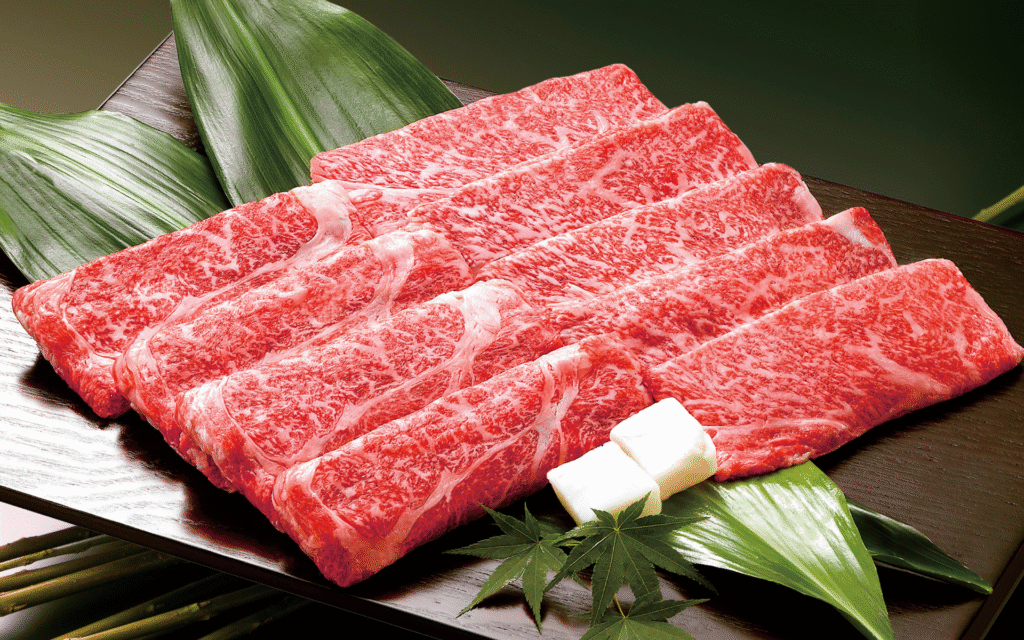
Around the world Wagyu beef is prized for its melt-in-your-mouth tenderness due to the spectacular marbling throughout the meat. Kobe beef is considered the very best type of Wagyu, which is known for the extreme care of the cattle with special diets and attention.
Kobe is a city in Japan and the capital city of the Hyogo Prefecture and the cattle raised there produce the highest premium beef. Only meat from cattle in Hyogo can be called Kobe, while Wagyu can be from any prefecture, as the name suggests. Ma means “Japanese-style” and Gyu means “cow” or “cattle”.
There are four breeds of Japanese cattle: Japanese Black, Japanese Brown, Japanese Poll, and Japanese Shorthorn. Kobe beef is further defined as from the Tajima Gyu cow, Japanese black that is raised in Hyogo Prefecture.
The tell-tale characteristic of Kobe beef is the marbling – evenly distributed flecks of fat throughout the meat – giving a distinct flavor and tenderness. BMS (Beef Marbling Standard), is a score rating given to red beef for the quality of its marble-like pattern. The unseen nutritional value includes monounsaturated fats, omega-3 and omega-6 fatty acids.
When purchasing Kobe beef, there is a Japanese Meat Quality Score based on four factors: “marbling”, “color and brightness”, “firmness and texture” and “fat color, luster quality”. Each factor is graded from 1 to 5, with 5 being the highest score.
Kobe cattle are not fed pasture grass. They are given a diet of dried forage, rice straw and supplements of blended soybean, corn, barley, wheat bran and other special ingredients. “Natural herbs and even beer is said to add flavor to the meat”, says Jesper Boelskifte, General Manager of Angus Australia. “In fact, each cow gets only two in the UK serving authentic Kobe beef.”
Kobe is a populated area and there is no room for free-range grazing. Cows are raised to be more than 2 years old before slaughter, while common cattle live only one and one-half years. The life of a Kobe bovine is considered by many to be luxurious.
According to Hisato Hamada, “Master of Wagyu” and co-founder of the popular Wagyumafia restaurant in Tokyo, regular massages help to evenly distribute their fat, although some claim that massaging is merely needed in place of muscular exercise. There is no dispute that it makes the cattle more comfortable and relieves stress.
Music, such as Beethoven creates a “happy life”. They are kept warm in winter and cool in summer. Hamada says it is also essential that the cows never know they are about to die, and slaughtering is done as quickly and painlessly as possible.
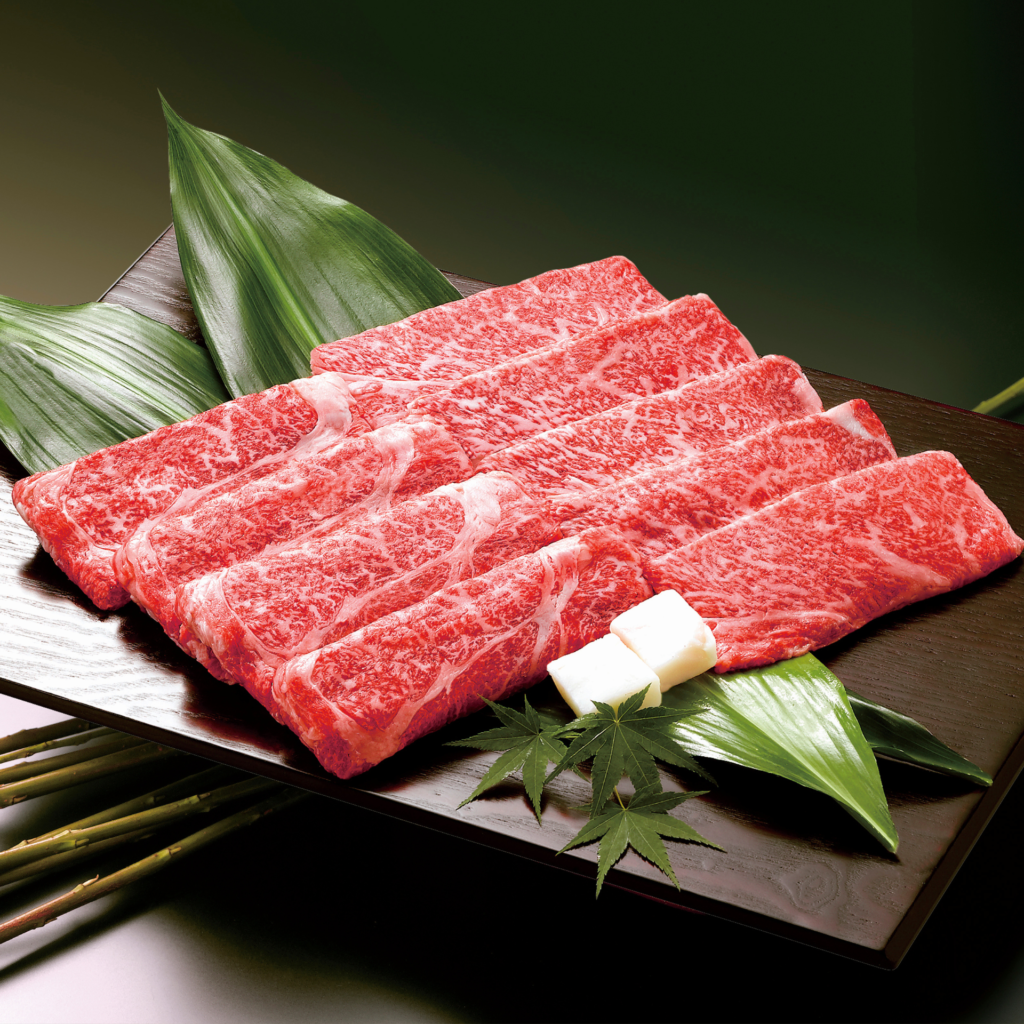
To be authentic certified Japanese Kobe Beef the following criteria need to be met:
✓ Breed of cattle is pure lineage Tajima (Tajima Gyu), between 28-60 months of age, born, raised and slaughtered in the Hyogo Prefecture of Japan.
✓ Certified as having a yield score of A or B, Japanese Meat Grading Association quality score of 4 or 5.
✓ BMS score of 6 or higher on the Tajima-Gyu marbling scale (scale 1-12).
✓ Has the “Japanese Chrysanthemum” seal officially certifying it as Kobe Beef.
This certification process is so strict that when the beef is sold in stores and restaurants, it must carry a 10-digit number to identify the origin of the Tajima-Gyu cow.
In 1976, four Wagyu bulls were brought to the USA for cross breeding with Angus cattle. This created an American Wagyu Kobe Style beef. To mimic the Japanese diet, the cattle were fed a mixture of corn, alfalfa, barley and wheat straw. Even so, as mentioned above, it does not meet all the requirements to be certified as authentic Kobe beef, yet it is still a much higher quality beef than normal standards.
In 1990, Australia first imported Wagyu and began using artificial insemination in a breeding program. There are also Canadian and European Wagyu producers, and while Wagyu is always Kobe, it is not always Kobe.