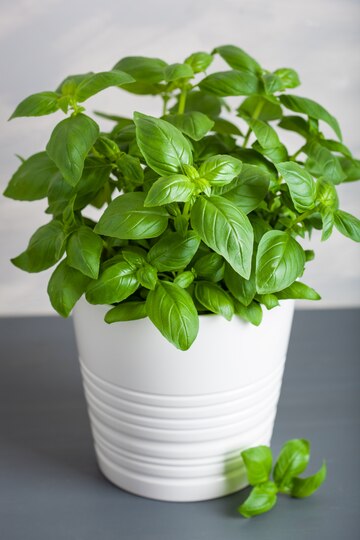
In Cambodia, we’re blessed with many varieties of basil. Holy basil, Thai basil and Genovese basil are the most common variety found here. Many of these are native to Cambodia and Southeast Asia as the climate is most favorable for the basil plant. Most often it is used as a final ingredient added at the end or very briefly cooked, as cooking tends to destroy the flavor of the basil.
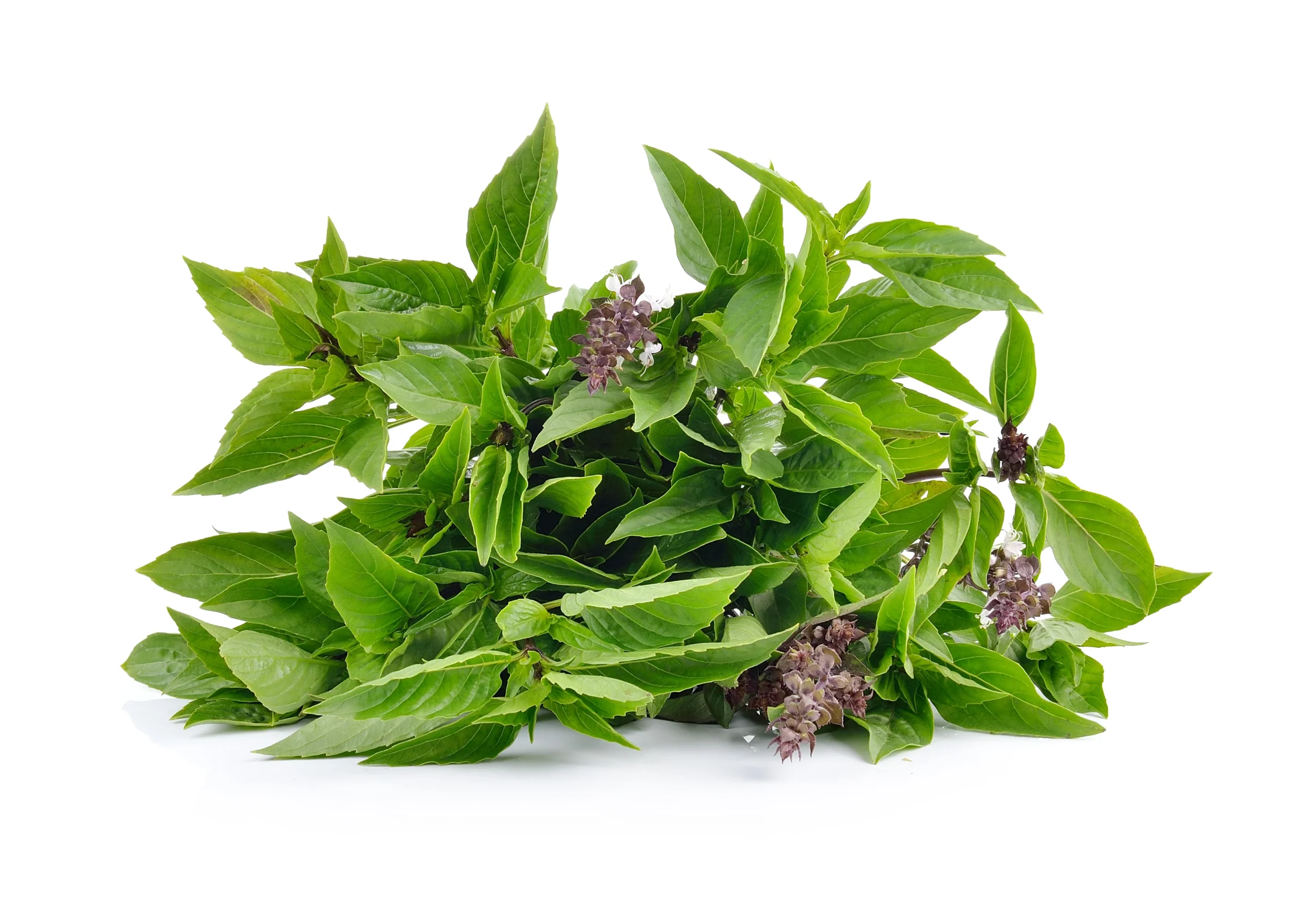
Thai basil has a strong, savory flavor and distinct aniseed quality. The most commonly used variety, it is especially used in curries and for garnishing a huge variety of salads and dishes. As well as the aniseed tones, it also contains a spicy component. The leaves are narrow, small and have purple/red stems. Think noodle salads, banh chao and spicy mango salad.
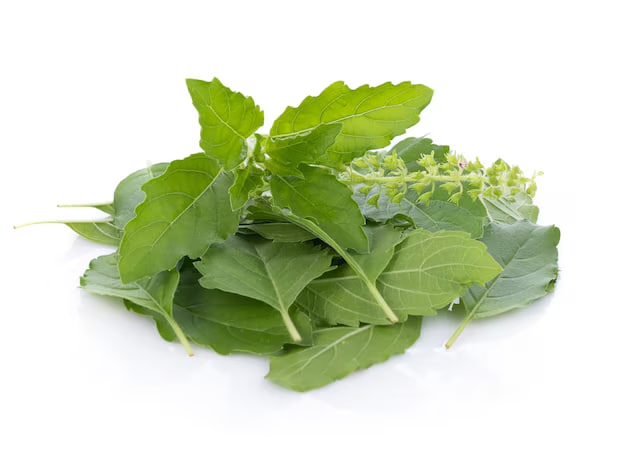
Holy basil is associated with the worship of Vishnu and is often used for making tea in Ayurvedic medicine, as it is thought to cure many ailments. Native to India and cultivated widely throughout Southeast Asia, it’s easy to get your hands on Holy basil. It is also used in Thai cooking and featured in many stir-fry dishes, particularly those with seafood. Its final, almost peppery flavor is that it is a natural repellent for insects and dried Holy basil can be used in rice and grain stores to keep pests at bay! The leaves are wide, not quite love heart shaped and light green or purple, with a strong scent.
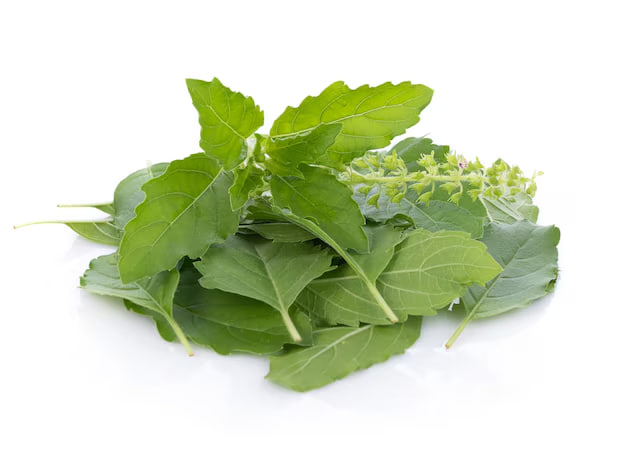
Sweet basil, also known as Italian basil or Genovese basil, is more commonly associated with Italian cuisine and a fairly new variety to Cambodia. Famously used in pesto, with pine nuts and olive oil, pesto can add a zing to a simple pasta, scrambled eggs and more. Fresh leaves mingled with fresh mozzarella cheese mounds and juicy red tomatoes for the salad called Caprese Salad with a drizzle of pesto or balsamic reduction is another popular way to enjoy this sweet, lip-smacking herb. Its wide, dark green, glossy leaves make it recognizable from other varieties used in Cambodia.
Basil is a present flavor in many dishes and it’s also making its way into cocktails and juices. Thank the gods. 🌿